
Roofing
Roof replacement and repair.
A roof is a system: decking, underlayment, flashing, ventilation and the shingle on top. We replace and repair all of it, and we tell you which parts your roof actually needs.
What we do
Roofing services
-
Full roof replacement
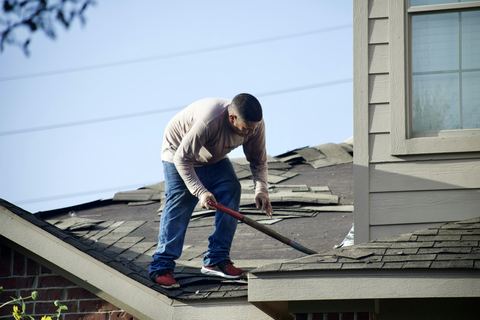
Tear-off of the existing roof, inspection and repair of the decking, new underlayment and flashing, ridge and intake ventilation where needed, and new shingles. Debris is hauled and the yard is magnet-swept for nails.
-
Roof repair
Leaks, missing or wind-lifted shingles, failed pipe boots and flashing, and storm damage. We tell you plainly when a repair makes sense and when it is money better put toward a replacement.
-
Decking, flashing and ventilation
Rotten decking is replaced, not covered. Flashing at chimneys, walls and valleys is replaced with the roof. Attic ventilation is checked because a roof that cannot breathe fails early.
-
Gutters with the roof
Gutters and downspouts replaced at the same time as the roof, so the drip edge, gutter apron and gutter are installed as one system. Details on the gutters page. Read more
Materials
Know what you are comparing.
Most homes in metro Atlanta have asphalt shingle roofs, and that is what we install most often. These are the main categories you will hear about when comparing estimates.
- Architectural asphalt shingles
- The standard for most homes in the area: a layered, dimensional shingle that is heavier and holds up better than the flat three-tab shingles common on older roofs. Available in a wide range of colors. This is what most homes here use.
- Designer and premium asphalt shingles
- Thicker, deeper-profile shingles that mimic slate or wood shake. Higher cost; chosen for appearance on larger or more visible roofs.
- Three-tab asphalt shingles
- The flat, uniform shingle found on many older homes. Lowest cost, shortest expected life. Usually only specified when matching an existing roof section.
- Other roofing materials
- Metal, tile and synthetic products exist and have their place. Ask us about your roof; if a material is outside what we install, we will say so rather than quote it.
Process
What the roofing estimate includes
-
Site visit
We get on the roof, measure it, check the decking from the attic where possible, and photograph flashing, penetrations, valleys and any existing damage.
-
Written estimate
Scope, materials by manufacturer and product name, color, what is included (tear-off, decking allowance, flashing, ventilation, disposal) and the price.
-
Scheduling
Once approved, you get a start date. Most single-family replacements are completed in one to a few days depending on size and weather.
-
Installation and walk-through
The crew protects landscaping and walkways, completes the work, hauls debris and sweeps for nails. We walk the finished roof with you and leave photos of the completed work.
Anatomy of a roof we install
Eight layers. Every one of them matters.
A roof is not shingles on plywood. Hover or tap a layer to see what it does, then explode the view to see how they stack.
Hover or tap a layer.
How big is my roof?
Roofers measure in squares. Here is roughly how many you have.
A square is 100 square feet of roof surface. Enter the footprint of the house and the roof pitch and we will do the geometry. It is a planning number: real measurements come from the site visit and include overhangs, dormers and valleys.
- Roof surface, plus 10% waste
- — sq ft
- Pitch multiplier
- ×—
- Bundles of shingles
- ~—
Formula: footprint × √(1 + (rise ÷ 12)²) ÷ 100, plus a 10% allowance for waste and overhang. Multi-story homes use the footprint of the top floor, not total living area.
Get it measured properlyRepair or replace?
Answer five questions and get our honest read.
This is the conversation we will have before we price anything. It is not a substitute for getting on the roof, but it will tell you which way the answer is leaning.
Storm damage
Storm damage and insurance claims
After hail or wind we inspect the roof, siding and gutters, document every finding with photos and measurements, and give you a written report you can hand to your insurance company. If you file a claim, we meet the adjuster on site so the damage is seen in person. The carrier decides what is covered. Our job is to make sure the condition of the roof is documented before anyone decides anything, and to build to the scope that gets approved.
We do not promise claim approvals, waive deductibles or offer a “free roof,” and under Georgia law (O.C.G.A. § 10-1-393.12) a roofing contractor cannot negotiate your claim for you. We document; you and your carrier decide.
After a storm
Check these before you call anyone.
Walk the property from the ground. Tick what you see. We will fold the list into your inquiry so we arrive knowing what to look for.
Three or more of these on the same side of the house is a strong sign of a claim-worthy event. Do not sign anything with a contractor who shows up at the door, and do not let anyone on the roof before it is photographed.
If it becomes a claim
What an insurance claim looks like, step by step.
Most homeowners have never filed one. This is the sequence, and where we fit in it.
-
We inspect the roof, siding and gutters, photograph every finding, measure the roof and write it up. You get the report whether or not you file.
-
You call your carrier or file online. You will get a claim number and an adjuster will be assigned. We cannot file for you, and no contractor should.
-
We meet the adjuster at the house so the damage is seen on the roof, not described over the phone. Our report and photos go to them.
-
The carrier issues a scope of what they will pay for. We compare it line by line against our own measurements and photographs and give you the differences in writing. Anything missing goes back to your carrier from you — we are not permitted to negotiate it on your behalf, and we do not.
-
We build to the approved scope with the materials named in it. Changes are documented and submitted; nothing is substituted quietly.
-
On a replacement-cost policy the carrier holds back depreciation until the work is complete. We send the final invoice and certificate of completion so that balance is released to you.
Two things worth knowing. Georgia law (O.C.G.A. § 10-1-393.12) bars a residential roofing contractor from representing or negotiating your claim, or advertising that it will — only a licensed public adjuster may do that. The same law gives you until midnight of the fifth business day after your insurer tells you in writing that all or part of the claim is not covered to cancel a roofing contract paid from insurance proceeds, and a contractor generally cannot require payment before that window closes. We will never offer to cover your deductible, and you should walk away from anyone who does.
Questions
Common questions about roofing.
How do I know whether I need a repair or a full replacement?
Age, the number of problem areas, and the condition of the decking decide it. A single leak on a roof that is otherwise sound is a repair. Widespread granule loss, curling shingles, several leaks, or a roof past its expected life usually points to replacement. We tell you which one we would do if it were our house.
What happens if the decking is rotten under the old shingles?
We cannot see it until the old roof comes off, so the estimate states the per-sheet price for decking replacement in advance. If we find rot, you hear about it that day, with photos, before it is replaced.
Do you handle the permit?
Permit requirements vary by city and county in metro Atlanta. We confirm what your jurisdiction requires during the estimate and tell you how it is handled.
How long does a roof replacement take?
Most single-family asphalt shingle replacements take one to three days. Larger or steeper roofs, extensive decking repair and weather can extend that. The schedule is confirmed in writing before we start.
Will the crew protect my landscaping and driveway?
Yes. Shrubs and beds near the house are covered, the dumpster is placed on protective boards where practical, and the yard is magnet-swept for nails at the end of each day and again at completion.
Next step
Tell us about the roof or the siding.
A few sentences, the city or ZIP code, and what the property needs is enough to start. Call, or send the form and we will reply with next steps.